
Service pressure
Booking systems do not understand front of house
After years of working in and around restaurant service, the Guestwork team has seen pen and paper, spreadsheets, ResOS, Eat App, Quandoo, ResDiary, Avanista, SevenRooms, Favoritetable, TheFork, OpenTable, and more used as ways to run bookings. Again and again, the same gap appears in the area that matters most: front of house during actual service.
The real test is not the booking form
Many booking systems look capable when you are calmly reviewing features. They can take a name, a time, a party size, and a phone number. They can send confirmations and collect data. On paper, that looks like the job.
But the real test is not the booking form. The real test happens during service, when the phone is ringing, guests are arriving early, a table is running late, the kitchen is under pressure, and the person on the floor has seconds to make a decision.
The problem is front of house
The problem with all of these systems is that they do not truly understand front of house. They may understand reservations, payments, marketing, deposits, and guest data. But front of house is where those pieces collide with reality.
Front of house is not a clean list of bookings. It is judgement, timing, table pressure, guest expectations, staff communication, and constant trade-offs. It is knowing whether to seat a walk-in, hold a table, move a booking, warn the kitchen, or protect a later reservation. That is the part most systems still do not see.
Service is where pressure becomes expensive
In a live restaurant, one false move can cost revenue. Seat the wrong table too early and you block a later booking. Hold a table too long and you lose a turn. Miss a note and you damage hospitality. Overload the kitchen and the whole room feels it. Fail to see a table becoming free and you turn away money you could have taken.
This is the part software often underestimates. Restaurants do not only need a diary. They need a live operating view of the room.
Pen and paper is flexible, but fragile
Pen and paper has one strength: it is fast and human. A good operator can mark, cross out, circle, and improvise. But it also carries risk. It can be misread, misplaced, overwritten, or understood only by the person who made the notes.
During a handover, that matters. During a busy service, it matters even more. The information may be there, but the system is living in one person's head.
Spreadsheets are organised, but not alive
Spreadsheets can bring structure, but a restaurant floor is not a spreadsheet. Tables move. Guests arrive in waves. A booking that looks fine in a row can be awkward in the room. A sheet can record information, but it does not naturally show the pressure of service.
Marketplaces and booking tools often miss the floor
Many modern tools focus heavily on acquisition, widgets, deposits, marketing, guest databases, or marketplace visibility. Those things can matter. But if the system does not help the team make fast, accurate decisions during service, it has missed the hardest part of restaurant operations.
The person running the floor needs to know what is happening now: which tables are available, which are reserved, which guests are late, which tables are about to turn, where a walk-in can go, and whether the next booking will fit without creating a problem later.
The floorplan is not decoration
A real floorplan is not a pretty extra. It is the map of the business during service. The table, the time, the area, the booking status, and the guest notes need to work together. If they are split across screens, staff lose speed.
That is where many systems fall short. They hold booking data, but they do not always help the team run the room.
Why Guestwork is different
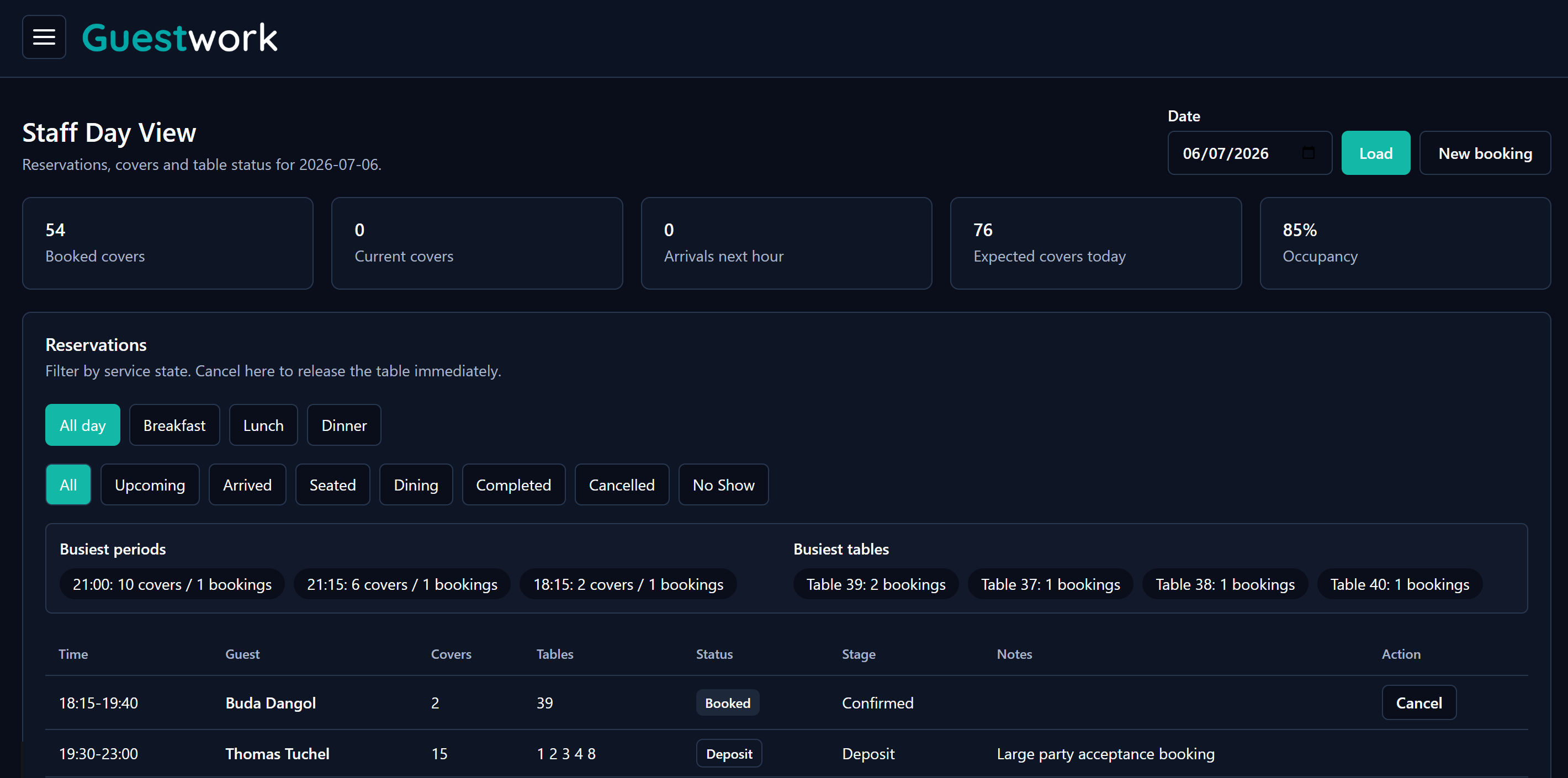
Guestwork is being built around the pressure points operators keep seeing in service. It is not only about taking bookings. It is about giving staff a clear day view, live floorplan, area control, table status, guest notes, and service decisions in one place.
Restaurants need software that understands the moment where the money is won or lost: the live service, where decisions happen quickly and the room does not wait.
Need a booking system built for service?
Book a Guestwork demo and see how it handles the floor, not just the form.
Book a demo