
Assisted service intelligence
A booking system that learns your business
The best person on the floor knows the room almost instinctively. They know which tables turn quickly, which guests like the corner, which family needs space for a high chair, which celebration will settle in, and when moving one booking could unlock a better service. The next step for restaurant booking software is to learn those patterns, so it can help front of house even when the owner is not there.
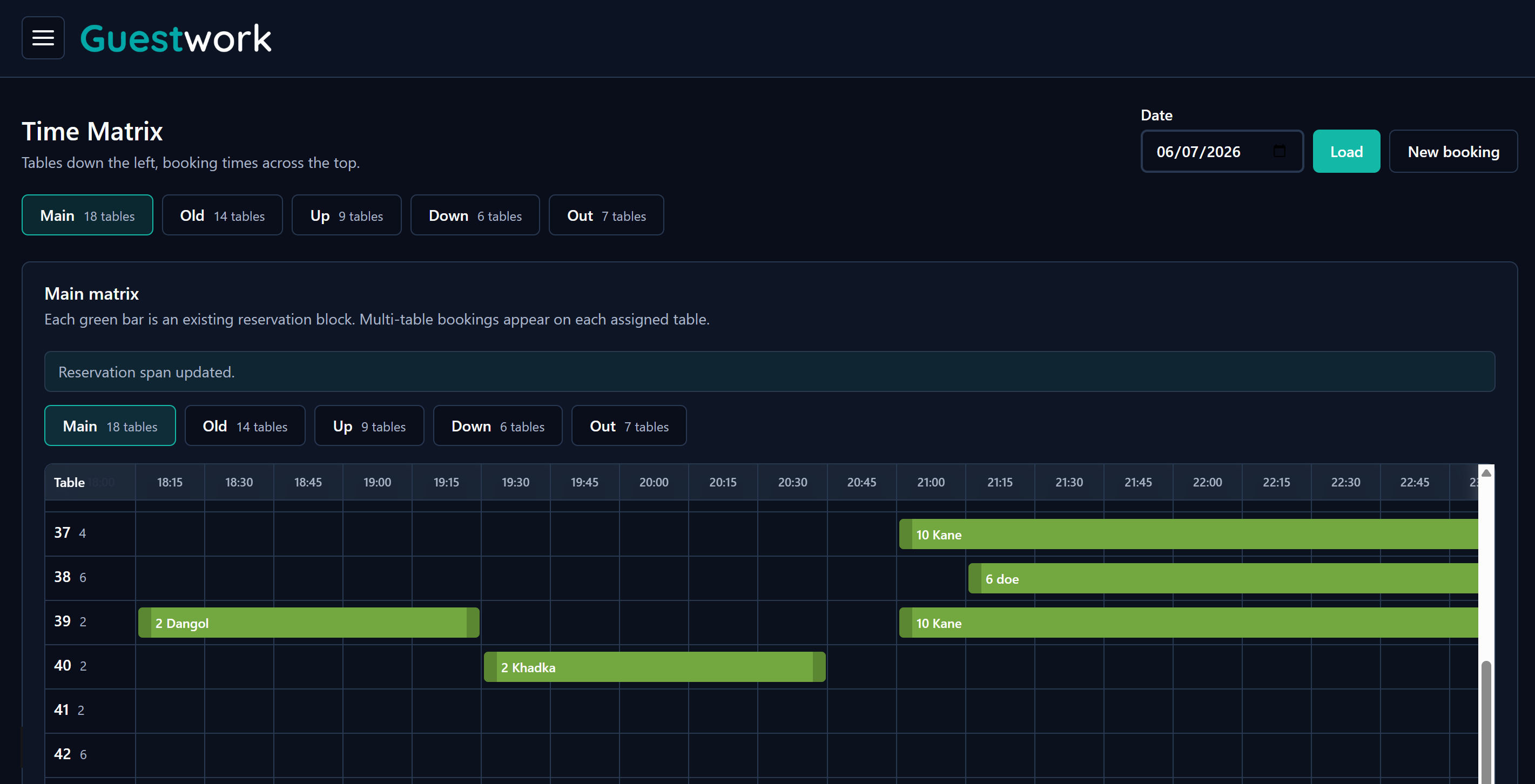
The system should learn from real decisions
Every shift contains useful information. When a manager moves a two-cover from a four-seater to a smaller table, holds a table for a regular, combines tables for a larger booking, or rejects a suggested move, that decision says something about how the business really works.
Most booking systems record the final state. A learning system should pay attention to the decision itself. It should learn which moves your team accepts, which ones they undo, which tables are treated as flexible, and which combinations work well during different services.
Assisted service intelligence is not just filling empty seats
Optimising a restaurant floor is more delicate than squeezing covers into a chart. The wrong table move can make service awkward, overload the kitchen, upset a guest, or block a better booking later. Good assisted service intelligence has to understand the restaurant's judgement, not replace it with blunt maths.
A useful system should ask better questions in the background: could a ten-person booking be accepted if two people were moved from a four-seater? Is that four-seater usually needed later for a family? Does this guest normally stay longer than average? Is the dining room already heavy with celebrations, children, or larger tables at that time of day?
Dwell time is personal
Table duration is often treated as a fixed rule: two people get this long, four people get that long, dinner gets longer than lunch. Those rules are useful, but they miss the human detail that experienced operators already know.
Some guests eat quickly. Some linger. Some book for a birthday and stay for another round. Some families with young children need more space but may leave earlier. Some larger groups order steadily and hold the table longer. A booking system should learn dwell and retention patterns by customer, cover size, time of day, booking source, occasion, and seating area.
Guest context changes the table plan
Are there children in the booking? Do they need high chairs or buggy space? Is it a celebration? Is there a guest who prefers a booth, a quieter area, step-free access, or the same table they had last time? These details are hospitality, but they are also operational signals.
If the system remembers those preferences, it can recommend better seating without the owner needing to brief every shift by memory. It can protect the right tables, flag awkward fits before they become service problems, and help new staff behave like they already know the regulars.
The live table stage matters
A booking plan made at midday is only a guess once service begins. During the shift, table stage becomes crucial: not arrived, seated, drinks ordered, mains away, dessert offered, bill requested, paid, resetting, ready again.
When the system knows the stage of each table, it can think ahead. A table that is paid and chatting may be available sooner than the original dwell time suggests. A table still waiting for mains may need protection. The next booking might be moved to another table quietly, or the team might be prompted to check whether a table can be released gently and professionally.
Table combinations should be remembered
Large bookings are rarely just about capacity. A room may technically fit ten people, but only certain table combinations feel natural. Some combinations block walkways. Some leave staff unable to serve comfortably. Some work at lunch but not during a tight Saturday evening.
Guestwork is shaped around the idea that the system should monitor table combinations on the fly and remember what worked. If tables 6, 7, and 8 made a strong ten-cover last Friday, that pattern should be available next time. If the team split a group differently because of a pram, a celebration, or a server section, that context matters too.
The owner should not be the only memory in the room
In many independent restaurants, the owner or strongest manager carries the system in their head. They know the regulars, the awkward corners, the table that looks like a four but behaves like a two, and the combination that only works if the party arrives on time.
That knowledge is valuable, but it is fragile. It disappears on days off, during holidays, across staff changes, and in the middle of a rushed handover. Software should help turn that judgement into an operating memory the whole team can use.
Killer features for a learning restaurant system
The most useful features are the ones that make the room feel better run without adding more admin. Here are the ideas we think matter most.
Explainable recommendations: if the system suggests moving a booking, it should say why. For example: this move protects a larger table later, keeps a regular in their preferred area, or reduces a kitchen spike at 7:30.
Confidence levels: not every suggestion should be treated equally. A low-risk table swap is different from moving a VIP, a birthday, or a guest with accessibility needs. The system should know when to recommend, when to warn, and when to stay quiet.
Kitchen-aware floor intelligence: the best table plan is not always the one with the most covers. If too many large groups arrive together, service suffers. Booking service intelligence should consider kitchen load, arrival waves, courses, and server sections as well as table space.
No-show and late-arrival intelligence: if a booking source, customer pattern, weather condition, or time of day increases no-show risk, the system can help the team decide whether to hold, confirm, overbook carefully, or release capacity earlier.
Service handover memory: the system should summarise what changed, what needs watching, which tables are under pressure, which guests need special attention, and which service intelligence decisions were made before the next manager takes over.
Automatic what-if planning: before refusing a booking, the system should quietly test safe alternatives. Could the restaurant fit the party by moving two tables, shortening a weak gap, using another area, or offering a slightly different time?
All of this should happen quietly
The goal is not to turn front of house into a cockpit full of alarms. The goal is to let the system work in the background 24/7, learning from the restaurant, watching the floor, and surfacing only the decisions that matter.
The team still stays in control. The software simply becomes a better second pair of eyes: one that remembers the past, understands the current service, and keeps testing whether the floor could work harder without feeling harder to run.
Want a booking system that learns the floor?
Book a Guestwork demo and see how floor control, guest memory, pacing, and assisted service intelligence can work together.
Book a demo